Groovepede Part 3: The Road to the Play Store
In Part 2 I moved the Groovepede backend to a Raspberry Pi in my house. Its job is to find an album on other music services. The Pi did not do that work itself. It asked a service called Odesli and passed the answer on.
Less than two weeks after that post, Odesli closed its free API. This post covers what I changed after that, and how I got the app into the Google Play Store.
Replacing Odesli
After Odesli closed, every album I added stayed an empty placeholder. The error message said public API access deprecated.
I found no replacement, so Groovepede now does the lookup itself. The Pi opens the album page you paste and reads the title, artist and cover from it. Then it searches the other services for the same album. Groovepede still uses those services. However, no single company can now break the whole app.
I had to drop two services. Amazon Music and SoundCloud pages stay empty until a browser runs their JavaScript, so the Pi has nothing to read. Groovepede now supports six services instead of eight.
Less Spotify
I removed the Spotify login. Its main feature was copying your queue to a Spotify playlist, and Spotify only lets five approved users use a hobby app like this. I also moved the tracklist to the Pi, so it now works for every album. I may add a login again one day, for example to sync your queue between your phone and your laptop.
Then I tried to share Aeropsia by Steve Hauschildt from the Spotify app. Groovepede said “Couldn’t find an album in that Spotify link.” The Spotify app shares a short link inside a sentence. I added support for the two kinds of short link I knew about, but sharing still failed. Spotify has a third kind, and my phone was sending exactly that one.
Steve Hauschildt was one third of Emeralds, a synth trio from Cleveland. His solo records are warm, slowly drifting electronic music. Aeropsia came out late last year, and I like it a lot.
The road to the Play Store
You could always install Groovepede from the browser. Few people do that, though. Most people look for apps in a store.
Android has a feature for this called a Trusted Web Activity. It lets an app open a website in Chrome, full-screen, without the address bar or tabs. The app gets Chrome’s speed and the site’s offline support. There is no separate Android code to maintain. When I update the website, the app updates too.
The website has to confirm that the app belongs to it. It does this by publishing a small file with the fingerprint of the app’s signing key. Without that file, the address bar stays visible. This check stops other people from wrapping your site in their own app.
You don’t have to write the Android project by hand. Google’s Bubblewrap generates it from your site’s PWA manifest. PWABuilder can do the same from a web page. For Groovepede, the whole Android setup is one config file.
Google rejected my first uploads a few times, and I fixed each problem. After that, the store listing was accepted. I still could not publish the app, though.
Twelve testers, fourteen days
Google has a rule for personal developer accounts opened after November 2023. Before you can publish an app to everyone, at least twelve people must join its test and stay in it for fourteen days in a row. A tester who leaves early doesn’t count. After that, Google reviews the app, which usually takes up to a week.
I understand the reason. Publishing an app is cheap, and the rule keeps out a lot of spam apps. It reminds me of Spotify’s rule from Part 2, though. Spotify limits a hobby app to five users until it has 250,000 monthly users. Neither rule fits a person who builds apps in the evenings. Still, twelve testers is a goal I can reach.
Where it is now
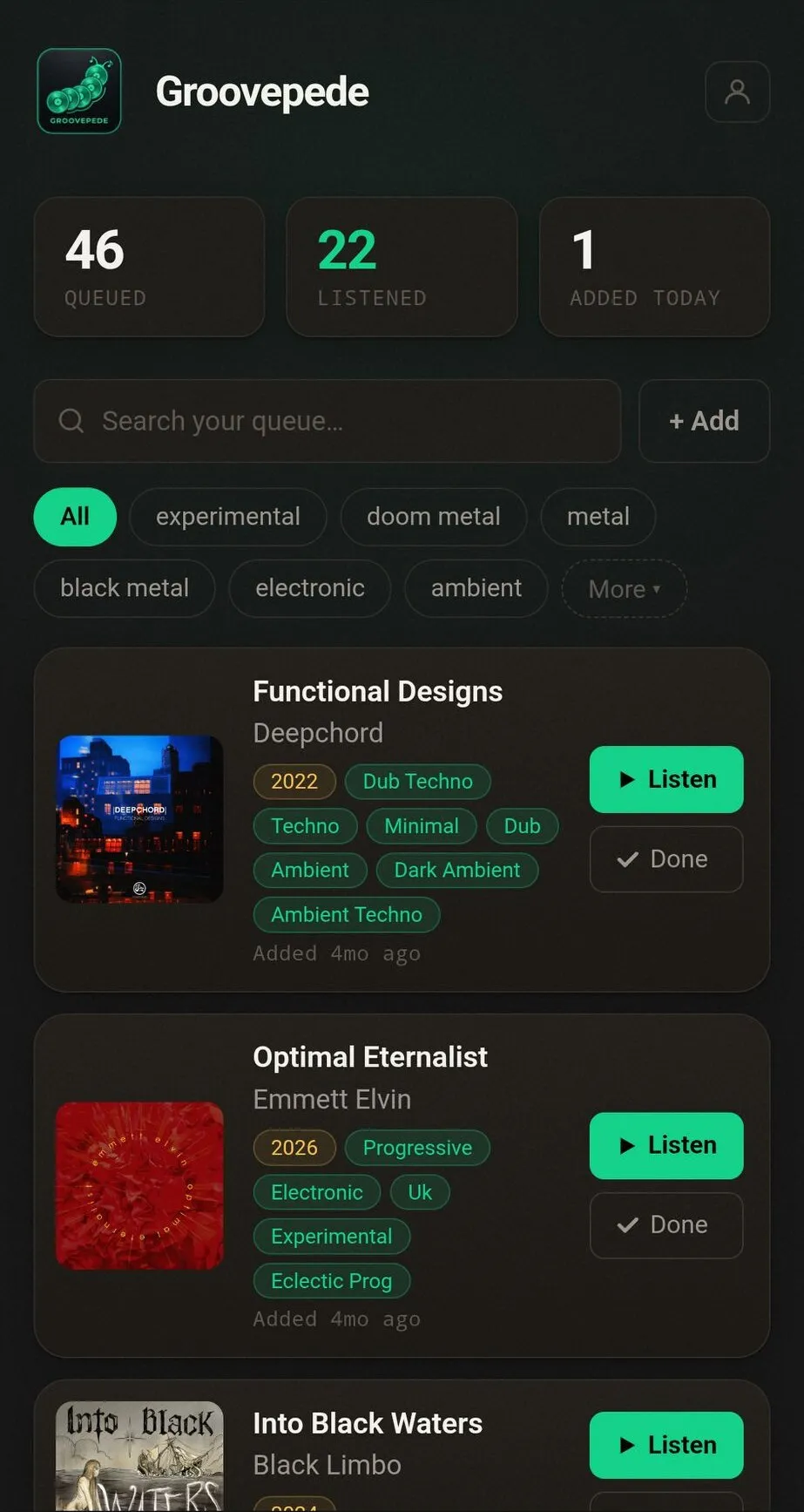
Groovepede supports six services and needs no login. Your albums are stored only on your device. The app still uses other companies’ services. If one of them shuts down, Groovepede loses a feature but keeps working.
The Android app is ready, and it needs twelve testers. If you use Android and want to try it, contact me on LinkedIn or send me an email. I’ll add you to the test.
You can also use Groovepede in your browser today. It’s free, needs no account, and you can install it to your home screen. The source code is on GitHub.